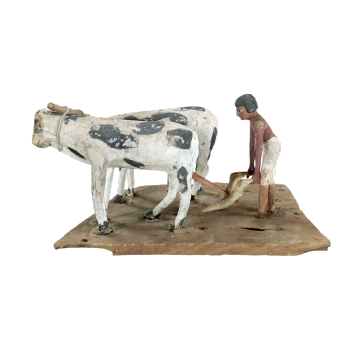
Ancient Egyptian Wooden Farming Scene Model

Ancient Egyptian Wooden Farming Scene Model
This is a model of an ancient Egyptian wooden farming scene. This model is part of the ancient Egyptian burial supplies. In ancient Egyptian religion, such models were designed to ensure by magical means that the deceased would have an adequate supply of food in the afterlife (the fields of Osiris). It depicts an important food production activity in everyday life-plowing. Its production dates back to the Middle Kingdom period (about 2040 BC to 1750 BC). The model is carved and painted from wood.
Ancient Egyptian wooden cat-shaped mummy box
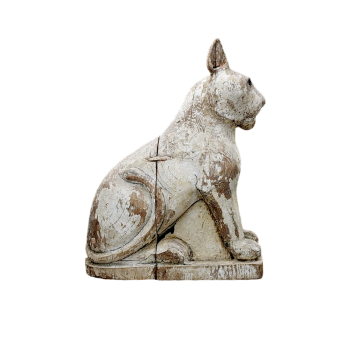
Ancient Egyptian wooden cat-shaped mummy box

This is an ancient Egyptian wooden cat-shaped coffin (or cat-shaped mummy box). In ancient Egypt, cats were seen as incarnations of the gods, especially associated with the goddess Bastet. This hollow wooden sculpture is specially designed to hold the coffin of a cat mummy. X-ray examination confirmed that many of these sculptures contained a complete cat mummy inside. Cats were mummified and placed in elaborate coffins, usually as offerings to the temple, intended to serve as messengers between humans and the divine world through the animal's soul.
Ancient Egyptian hippo statue

Ancient Egyptian hippo statue

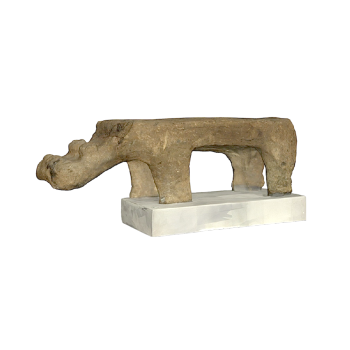
This is an ancient Egyptian hippo statue dating back to the Middle Kingdom period (c. 1961-1878 BC). This statue is the unofficial mascot of the Metropolitan Museum of Art and has a famous nickname "William". It is made of Egyptian glazed pottery (faience), a ceramic material made of quartz powder with a unique blue glaze. The statue was found in a shaft in the burial chamber of a steward named Senbi in the Mayr region of Egypt.
Statue of ancient Egyptian goddess Isis nursing Horus
Statue of ancient Egyptian goddess Isis nursing Horus

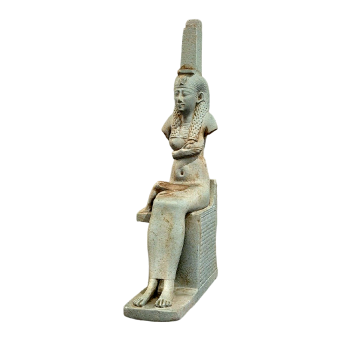
This is a statue of the ancient Egyptian goddess Isis nursing Horus. In ancient Egyptian mythology, Isis was the goddess of magic and healing. She raised and protected her son Horus alone and eventually avenged her father Osiris. This image of "suckling Isis" (Lactans) was very popular in the later period of Egyptian history to the Ptolemaic period (c. 664 BC to 30 BC).
Meritaten bust stone statue

Meritaten bust stone statue

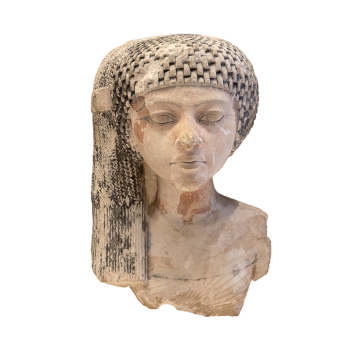
This sculpture is a limestone bust of Princess Meritaten from the period of Amarna in ancient Egypt. This statue was made during the Amalna period of the 18th Dynasty of the New Kingdom period of ancient Egypt (about 1353-1336 BC). It depicts one of the daughters of Pharaoh Ehnatun and his queen Naftiti, most likely their eldest daughter Melitati (Meritaten). The statue has a unique Amarna art style, which is characterized by the realism of the figure and slender, soft facial features. The statue is currently in the collection of the Louvre Museum in Paris, France.
Ancient Egyptian Sun Ship Model

Ancient Egyptian Sun Ship Model

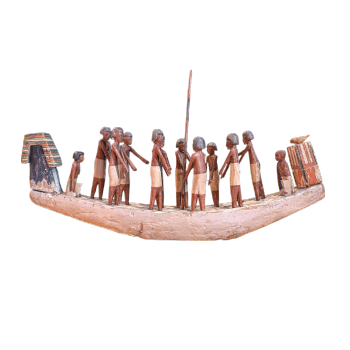
This is an ancient Egyptian ship model, often called the ghost ship or the sun ship model. This type of wooden model is an important funerary object of the ancient Egyptian Middle Kingdom period (about 2000-1760 BC) tombs. The ancient Egyptians believed that these models could work in the afterlife, helping the deceased navigate the Nile in the afterlife. The ship symbolizes the pilgrimage to Abados (the center of faith of the god Osiris of the Underworld), a journey necessary for resurrection and eternal life. Some of the models represent the holy ship that the sun god Ra takes to help the deceased join Ra's daily journey through the sky and the underworld.
Ancient Egyptian Ibis (mummy)

Ancient Egyptian Ibis (mummy)

This is an ancient Egyptian crested ibis, and such artifacts were very common in ancient Egypt, especially in the late ancient Egypt (c. 664-332 BC) and the Ptolemaic period. The ibis is the symbol of the ancient Egyptian god of wisdom, writing and the moon, Toth. The body (torso) is usually made of wood, and the head, neck and legs are usually cast in bronze and then inserted into the wooden torso. The torso section is often hollow and may contain embalmed ibis mummies.
Ancient Egyptian Baboon Stone Carvings
Ancient Egyptian Baboon Stone Carvings

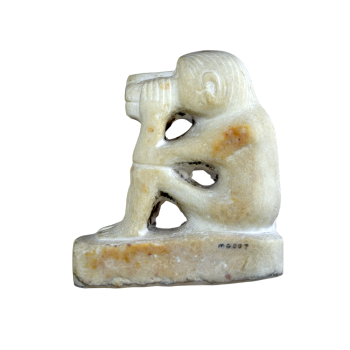
This is a small stone statue of a baboon in a typical ancient Egyptian-style squatting posture. In ancient Egyptian mythology, baboons were one of the incarnations of the god of wisdom, Thoth, and were often represented by this squatting posture with hands on knees and a solemn expression. It is worth noting that there is a clear manual ink book number "M6007" on the side of the base ". This shows that the model is generated by high-definition scanning based on real museum collections or archaeological unearthed cultural relics, and has extremely high scientific research and historical archive value.
Hassol cow statue (3D printable)

Hassol cow statue (3D printable)

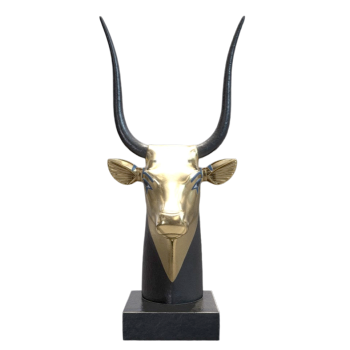
"Hathor bull head image" is a typical artistic image of Hathor (Hathor), the god of love, music and joy in ancient Egyptian mythology. It is marked by "cow head" or "female face with bull ears". It is widely used in ancient Egyptian temples, burial chamber reliefs, statues and decorative arts. This image is not only the core symbol of the Hassolge, but also bears the deep belief in "fertility", "sacred protection" and "joy of life" in ancient Egypt, and is an important physical carrier for the study of religion, art and social culture in ancient Egypt.
Tutankhamun sarcophagus (supports 3D printing)
Tutankhamun sarcophagus (supports 3D printing)

Tutankhamun was one of the most famous pharaohs of ancient Egypt. Many people know this young pharaoh because of its exquisite golden face. Among his many burial objects, the inner gold coffin is also dazzling, and it is also a world-famous art treasure. It is 187cm long and weighs 111kg. There are hieroglyphics in the center and edge.
Hathor's head image (3D printable)

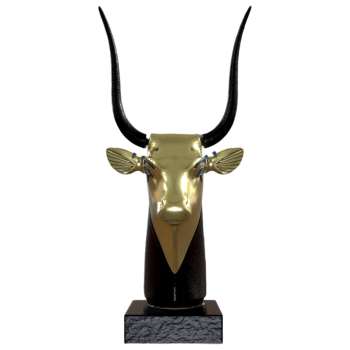
Hathor's head image (3D printable)

"Hathor bull head image" is a typical artistic image of Hathor (Hathor), the god of love, music and joy in ancient Egyptian mythology. It is marked by "cow head" or "female face with bull ears". It is widely used in ancient Egyptian temples, burial chamber reliefs, statues and decorative arts. This image is not only the core symbol of the Hassolge, but also carries the deep belief in "fertility", "sacred protection" and "joy of life" in ancient Egypt, and is an important physical carrier for the study of religion, art and social culture in ancient Egypt.
Dendra Zodiac relief (3D printable)

Dendra Zodiac relief (3D printable)

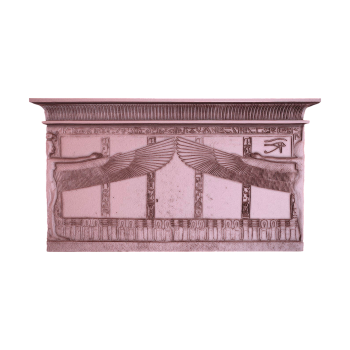
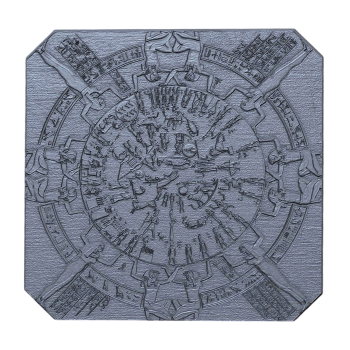
The "relief of the Zodiac in the Louvre" is an important relic of astronomical art in the late ancient Egypt (Ptolemaic period, about the 1st century BC-the 1st century AD). It was originally an "astronomical ceiling" decoration of the Temple of Dendra (Temple of Dendera) in Egypt. This group of reliefs is famous for accurate astronomical observation and mysterious religious symbols. It is a typical representative of the fusion of "astronomical calendar-theocracy" in ancient Egypt. It is now hidden in the "Egyptian Art Department" of the Louvre (Musée du Louvre) in Paris, France ".
Nefertari Temple Statue Ramses II

Nefertari Temple Statue Ramses II

"Statua Ramses II and Nefertari Temple Statue" (Statua Ramses II Tempio Nefertari) is a giant rock carving group in the New Kingdom period of ancient Egypt (about the 13th century BC), located in Aswan Province in southern Egypt Inside the temple, it is a monumental building built by the ancient Egyptian pharaoh Ramses II for his favorite queen Nefertari. With its grand scale, exquisite craftsmanship and profound religious and political connotation, this group of statues has become one of the most representative artistic treasures of ancient Egyptian civilization.
Mummy Osiris in a Silver Mask

Mummy Osiris in a Silver Mask

"Maize mummy Osiris with silver mask" is a unique sacrificial object in ancient Egypt. These mummies are usually made using corn cobs or corn kernels, symbolizing harvest and rebirth. During the production process, the ancient Egyptians decorated the corn cobs in a mummy-like shape, wrapped them in linen, and then put a silver mask on the head to represent Osiris (Osiris), the god of the underworld in Egyptian mythology. Osiris played an important role in ancient Egyptian religion, where he was considered the patron saint of the dead and a symbol of resurrection. By making such corn mummies, the ancient Egyptians hoped to pray for a good harvest and the continuation of life.
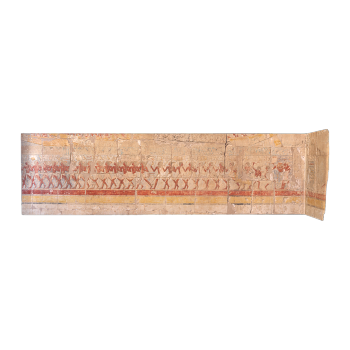
Soldiers' Parade Relief at Deir ez Zor Bari Temple
Soldiers' Parade Relief at Deir ez Zor Bari Temple

The Monument of Intef

The Monument of Intef

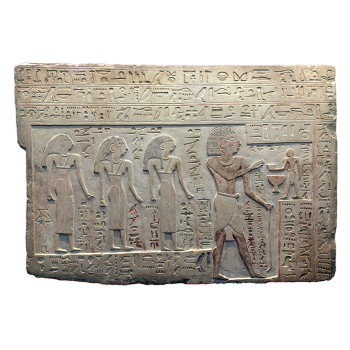
The Intef Stele is a stone tablet from the Middle Kingdom period of ancient Egypt, dating back to around 2000-1988 BC. It records the life and achievements of Intef. The top of the stone tablet bears the name of Nebhepetre Mentuhotep II, the founder of the Middle Kingdom. Intef claimed to be his servant and served as the fortress supervisor.
The painted reliefs of the Bakhrihat Shepsut Temple

The painted reliefs of the Bakhrihat Shepsut Temple

The pictographic characters carved by colored painting have repeated lintel reliefs with the words neb ankh, djed, and was written on them; All life, stability, and governance. The relief is located in the northwest corner of the column hall of the Hassel Church in the Hadbahrihat Shepsut Temple in Egypt.
Horus Statue

Horus Statue

This stone amulet of the Holy Falcon of Horus in ancient Egypt from the 21st to the 16th century BC is very common. The eyes are made of semi precious stones, dark blue lapis lazuli, and black obsidian.
Ankhu Stone Tablet

Ankhu Stone Tablet

The Ankhu Stele, housed in the Nelson Atkins Museum of Art, depicts an early artwork of a deceased husband and wife standing at a table filled with food, a necessary ritual for the continuation of the afterlife.
Jars from the 18th period of the ancient Egyptian dynasty

Jars from the 18th period of the ancient Egyptian dynasty

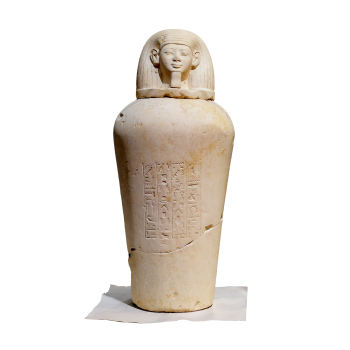
It is a cultural relic from the 18th period of the ancient Egyptian dynasty, approximately from 1400 BC to 1352 BC, during the reigns of Thutmose III to Amenhotep III. Discovered by Egyptologist Howard Carter and millionaire businessman Theodore M. Davis in King's Valley in 1902. Carter later discovered Tutankhamun's tomb, while Davis donated these artifacts to the Harvard University Museum of the Ancient Near East. Usually a set of four pieces is used to store the internal organs of mummified corpses. This exquisitely carved jar is one of three excavated jars in King's Valley.
Shabuti Coffin (First Half)

Shabuti Coffin (First Half)

It is a container used for funerals in ancient Egypt, specifically designed to hold Shabuti figurines, which are small wooden or ceramic figurines representing the servants of the deceased in the afterlife. The design inspiration comes from Osiris, the god of resurrection and afterlife in ancient Egypt, usually presented in the form of a mummy. The surface usually features exquisite paintings and pictographic inscriptions, taken from the Book of the Dead, to protect and guide the souls of the deceased. The shape and decoration vary by period and region, but they are usually humanoid or rectangular, sometimes with arched lids. Not only is it a part of funeral customs, but it is also a concrete manifestation of ancient Egyptians' concept of the afterlife.
Ancient Egyptian Fish Shaped Palette

Ancient Egyptian Fish Shaped Palette

It is an ancient Egyptian artifact that can be traced back to the Nagada II period from 3500 BC to 3300 BC. Discovered in El Amrah (located on the west coast from Asgard to Thebes) and currently housed in the Louvre Museum in Paris, France. This color palette is made of sandstone and features carving techniques. It measures 16 centimeters in length, 8.6 centimeters in width, and 1.1 centimeters in thickness. Unique design, often associated with ancient Egyptian makeup culture, as it was used to grind and mix pigments for body painting. It may also have ceremonial or symbolic significance, closely linked to the religious and cultural customs of ancient Egypt
Ancient Egyptian burial statues

Ancient Egyptian burial statues

A small sculpture used in Egypt for funerals, resembling the image of Osiris (whose body is a mummy), usually with the name of the deceased written on it. Many important tombs contain a large number of small sculptures of this kind, with the purpose of allowing them to complete various tasks that the Earth God may require the deceased to accomplish.
The Sykes Standing Statue, a diorite statue from the 18th Dynasty of ancient Egypt

The Sykes Standing Statue, a diorite statue from the 18th Dynasty of ancient Egypt

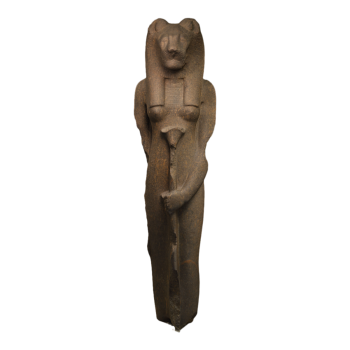
This cultural relic is a granite diorite statue of the 18th Dynasty standing in the position of Saikemaite. This is a statue depicting the goddess Sykes, who appears in the form of a lion headed female body but wears a sacred female wig. Her left foot is forward, her left hand holds a papyrus staff, and her right hand holds the Ankh of Life. Most of the right arm of this statue has been lost. The height of this statue is 120 centimeters, the width is 49 centimeters, and the depth is 47 centimeters. It is currently housed in the British Museum.
1 2 3 Next